
When we think about the microbiome, we usually think about the gut. But did you know that the vagina has its own microbiome too? In fact, a healthy vaginal microbiome is one of the body’s most important natural defences against infections. At the centre of this protection is a group of beneficial bacteria called Lactobacillus (Miller et al. 2016).
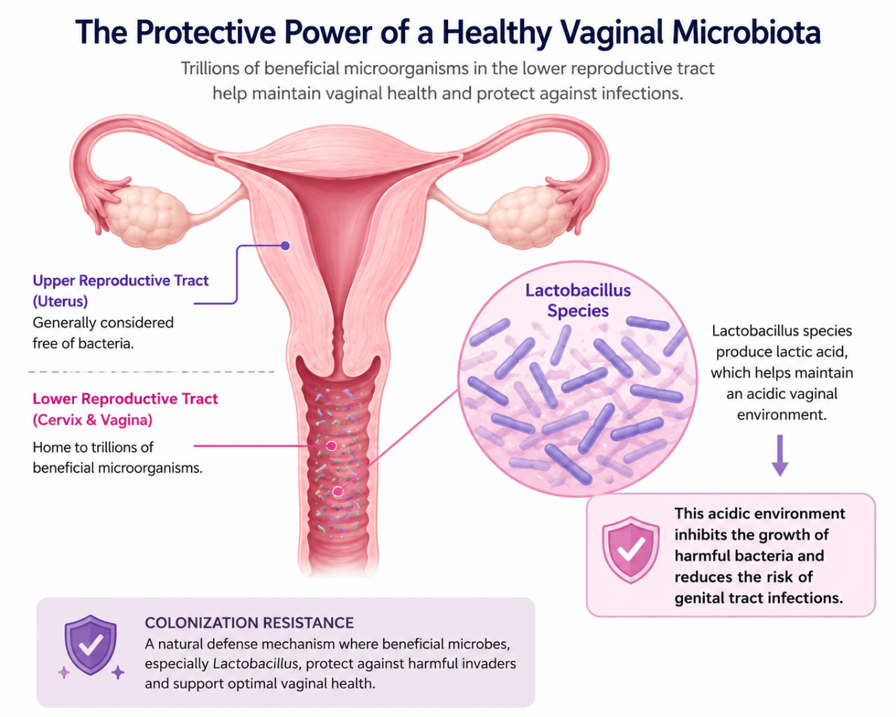
While the upper reproductive tract, including the uterus, is generally considered free of bacteria, the lower reproductive tract—particularly the cervix and vagina—is home to trillions of beneficial microorganisms (Miller et al. 2016).
Lactobacillus: Nature’s Powerful Protection
The vaginal microbiome is normally dominated by Lactobacillus species—the body’s natural defenders. These beneficial bacteria produce lactic acid, which keeps the vagina acidic (pH below 4.5). This acidic environment makes it difficult for harmful bacteria and yeast to grow, helping to maintain a healthy balance of microorganisms (Miller et al. 2016; Mirzaei et al. 2023).
By acting as the first line of defence, Lactobacillus helps reduce the risk of bacterial vaginosis, urinary tract infections (UTIs), yeast infections, sexually transmitted infections (STIs), and may even lower susceptibility to HIV infection (Mirzaei et al. 2023).
Your Gut and Vagina: More Connected Than You Think
It may come as a surprise, but your gut plays an important role in maintaining vaginal health. Researchers have found that the rectum—the last part of the bowel—acts as a natural reservoir for many of the beneficial bacteria that colonize the vagina, particularly Lactobacillus species (Mirzaei et al. 2023).
These bacteria can naturally migrate from the gut to the vaginal area, where they help establish and maintain a healthy vaginal microbiome (Mirzaei et al. 2023).
This close relationship between the gut and the vagina highlights why maintaining a healthy gut microbiome can also support vaginal health (Mirzaei et al. 2023).
Factors influencing microbiota composition
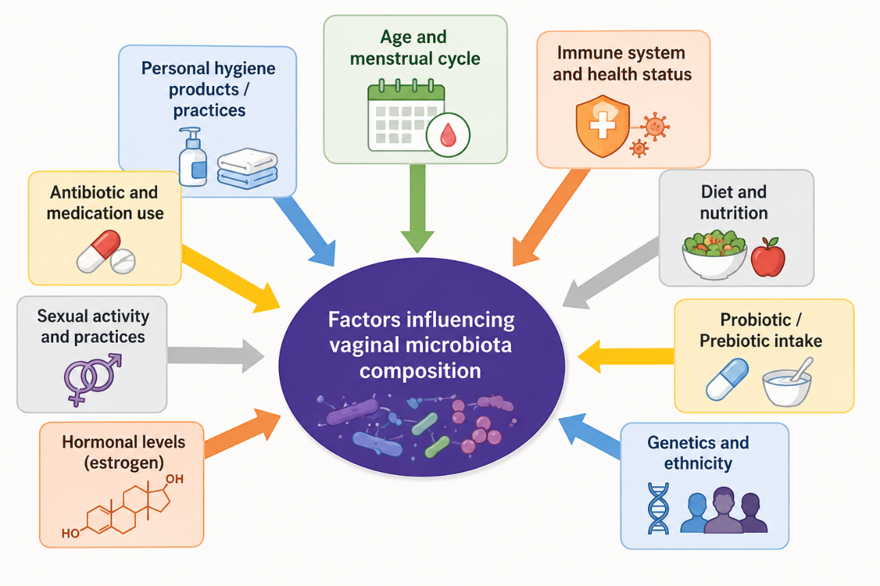
The gut is only one piece of the puzzle. The vaginal microbiome is influenced by many factors throughout a woman’s life, including age, hormonal changes associated with puberty (menarche), pregnancy, and menopause. Lifestyle and behavioural factors, such as sexual activity, vaginal douching, and the use of spermicides or certain contraceptives, can also alter the balance of vaginal bacteria. Together, these factors shape the composition of the vaginal microbiome and influence its ability to protect against infection (Mirzaei et al. 2023; Sahu et al. 2026).
If you’re reading this and wondering how your own hormones, cycle patterns, diet, or recurring symptoms may be influencing your vaginal or gut microbiome, you’re not alone. These systems are highly individual, and small imbalances can show up in very different ways.
If you’d like personalised guidance, you can book a consultation with me to explore what’s driving your symptoms and how to support your body in a more targeted way
How is oestrogen involved?
Oestrogen plays an important role in keeping the vaginal microbiome healthy. As oestrogen levels rise during the menstrual cycle, the lining of the vagina becomes thicker and produces more glycogen, a type of stored sugar. Beneficial Lactobacillus bacteria use sugars broken down from glycogen as a food source. As a result, Lactobacillus levels are usually highest and vaginal pH is at its lowest just before ovulation, when oestrogen levels peak (Miller et al. 2016.)
Short-Chain Fatty Acids: Helpful in the Gut, Different in the Vagina
Because the gut and vagina have very different environments, not every compound that is beneficial in the gut has the same role in the vagina.
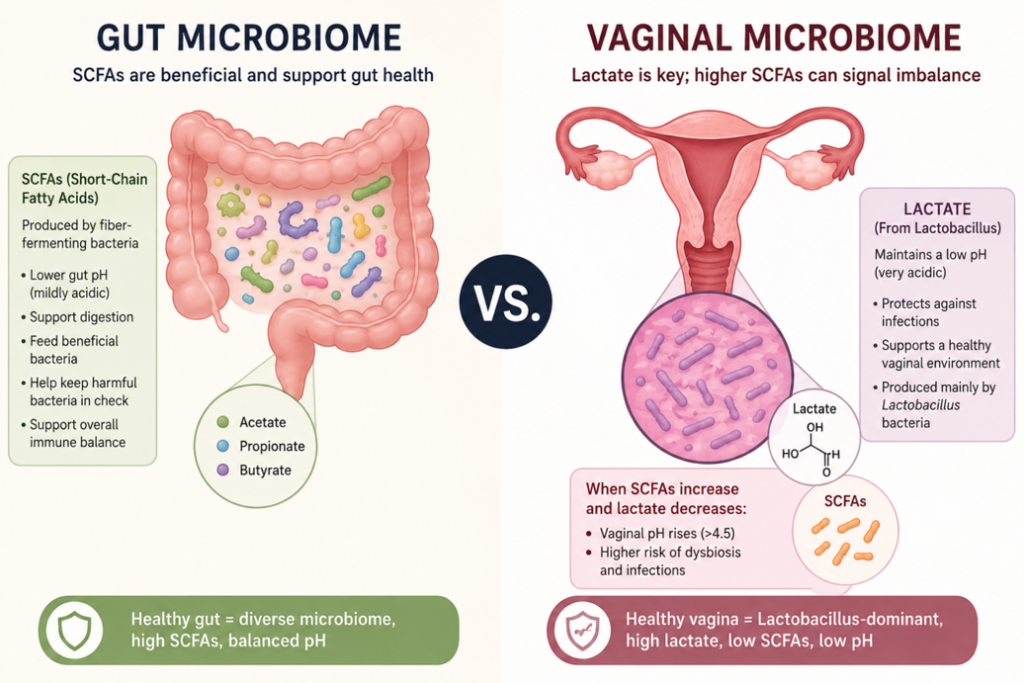
SCFAs are known for being helpful in the gut, where they support digestion, strengthen the gut lining, and help keep harmful bacteria under control. But in the vagina, the situation is different. Here, protection mainly depends on lactic acid made by Lactobacillus. SCFAs are normally present only in small amounts, and higher levels—especially alongside lower lactate—can be a sign that the balance of the vaginal microbiome has been disrupted (Mirzaei et al. 2023).
Why Lactobacillus is so important?
This imbalance of the vaginal microbiome can lead to diseases such as Bacterial Vaginosis, which occurs when the protective Lactobacillus bacteria in the vagina decrease and are replaced by other bacteria. As a result, lactic acid levels fall, the vaginal pH rises, and levels of short-chain fatty acids (SCFAs) increase. Elevated SCFAs in the vagina are associated with inflammation and microbial imbalance and contribute to the symptoms and progression of BV (Acharya et al. 2024).
The human vaginal microbiome has a unique nature
Lactobacilli dominance is unique to humans. While in humans it comprises more than 70% of resident bacteria, in other mammals lactobacilli rarely comprise more than 1% of vaginal microbiota (Miller et al. 2016).
One of the reasons the human vaginal microbiome is unique may be its unusually high glycogen content. Glycogen is a stored form of sugar that serves as an important food source for beneficial Lactobacillus bacteria. These bacteria convert sugars from glycogen into lactic acid, helping to maintain the vagina’s acidic environment and protect against harmful microbes. Compared with other mammals, humans appear to have much higher levels of glycogen in the vaginal lining, which may explain why Lactobacillus species are so dominant in healthy women (Miller et al. 2016).
Did Human Diet Shape Our Vaginal Microbiome?
Researchers have proposed that the high levels of glycogen found in the human vagina may be linked to the evolution of the human diet. Because humans have adapted to consume relatively large amounts of starch through cooking, agriculture, and efficient starch digestion, it has been suggested that this dietary shift may have contributed to higher glycogen levels in the vagina. This, in turn, could create ideal conditions for Lactobacillus to thrive (Miller et al. 2016).
However, this “diet hypothesis” remains speculative, and there is currently no convincing evidence that dietary starch or carbohydrate intake directly influences vaginal glycogen levels or the composition of the vaginal microbiome (Miller et al. 2016).
Can Your Diet Shape Your Vaginal Microbiome?
Sugar vs Fibre: Which Matters More?
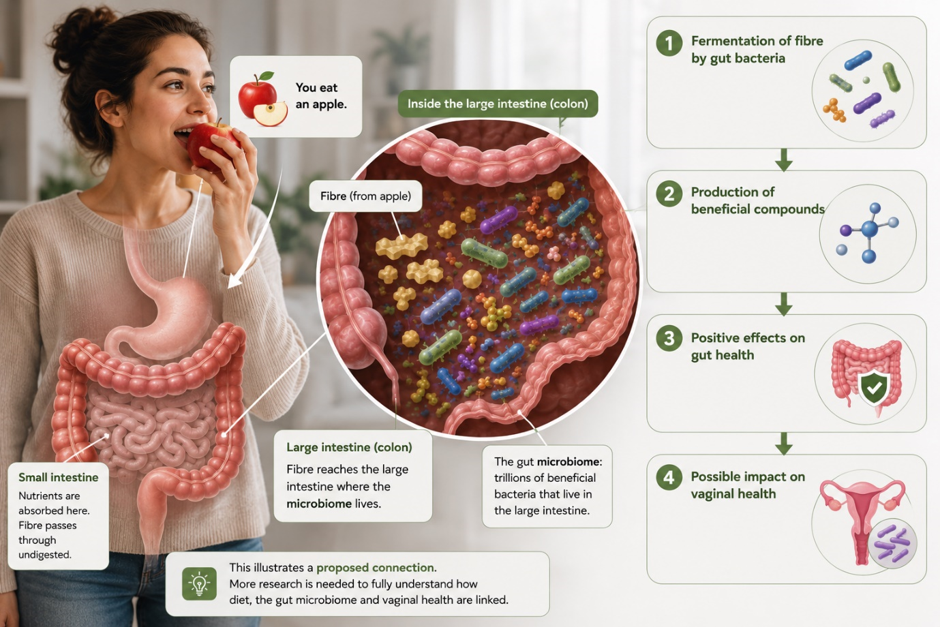
A recent systematic review found that diets with a higher glycaemic load (GL) (a measure of how much a meal is expected to raise blood sugar) were consistently associated with an increased risk of bacterial vaginosis (BV), a condition characterized by a reduction in protective Lactobacillus bacteria and an imbalance of the vaginal microbiome. In contrast, higher fibre intake was associated with a lower risk of BV (Baliakas & Davies, 2025).
One possible explanation is the gut–vagina connection. Dietary fibre is fermented by beneficial bacteria in the large intestine, helping to support a diverse and healthy gut microbiome. Researchers suggest that a healthier gut microbiome may also benefit the vaginal microbiome, as bacteria can migrate from the rectum to the vagina. However, this mechanism has not yet been proven, and more research is needed to determine whether increasing fibre intake can directly improve vaginal health (Baliakas & Davies, 2025).
Can Probiotics Help?
Another review found that certain Lactobacillus strains (specific to the vaginal microbiome) may help restore a healthy vaginal microbiome by inhibiting the growth of harmful bacteria, supporting the immune system, and enhancing the effectiveness of antibiotic treatment (Sahu et al. 2026).
A Probiotic Yoghurt with a Difference
These findings are supported by a well-designed clinical trial in which women were randomly assigned to consume either a probiotic yoghurt or a placebo drink. The probiotic yoghurt was fortified with Lactobacillus strains isolated from the vaginas of healthy women, in addition to the bacteria normally found in yoghurt. Women who consumed the probiotic yoghurt experienced fewer cases of bacterial vaginosis than those in the placebo group, suggesting that targeted probiotics may help support a healthy vaginal microbiome (Laue et al. 2018).
What About Regular Yoghurt?
Although this wasn’t an ordinary yoghurt, that doesn’t mean your regular yoghurt isn’t worthwhile. Supermarket yoghurts contain live bacteria that can support gut health, even if they don’t contain the specialised vaginal Lactobacillus strains used in the study. Combined with a fibre-rich diet, yoghurt remains a simple and nutritious way to nourish your microbiome.
Why vitamins matter for vaginal health

Getting enough vitamins may help support a healthy vaginal microbiome. Research suggests that deficiencies in vitamins A, C, D, and E are associated with a higher risk of bacterial vaginosis (BV) (Ram et al. 2025).
Vitamin D appears to play a particularly important role. It helps maintain the strength of the vaginal lining, creating a protective barrier against harmful bacteria and reducing the risk of infection (Ram et al. 2025).
Vitamins A, C, and E also support vaginal health through their antioxidant properties. Along with plant compounds such as betaine and beta-carotene, they help protect cells from oxidative stress and support the immune system’s ability to defend against pathogens (Ram et al. 2025).
Does body weight affect the vaginal microbiome?
Body weight may also influence vaginal health. A recent systematic review concluded that women with a higher body mass index (BMI) have an increased risk of vaginal infections (Ram et al. 2025).
One possible explanation is that excess body weight is associated with chronic low-grade inflammation. Researchers believe this inflammatory environment may make it more difficult for beneficial Lactobacillus species to thrive. A reduction in these beneficial bacteria may increase the risk of bacterial vaginosis and other vaginal infections (Ram et al. 2025).
While BMI is only one of many factors that influence the vaginal microbiome, maintaining a healthy weight, eating a balanced diet, and supporting overall metabolic health may all contribute to a healthier vaginal environment.
Key Takeaways
- A healthy vaginal microbiome is usually dominated by Lactobacillus.
- These bacteria protect against infection by producing lactic acid and maintaining an acidic environment.
- Diet, hormones, body weight, and lifestyle all influence vaginal health.
- Fibre-rich foods and overall healthy eating patterns appear beneficial, while evidence for probiotics is promising but strain-specific.
- More research is needed before specific dietary recommendations can be made for improving the vaginal microbiome.
If you’ve made it this far, you now know how closely the vaginal microbiome is connected to hormones, diet, inflammation, and overall metabolic health.
But understanding the science is only the first step — the next step is applying it to your own body.
If you’re struggling with symptoms like irregular cycles, painful periods, recurrent infections, bloating, weight changes, or suspected hormonal imbalance, a personalised approach can make a real difference.
If you’d like personalised support, book a consultation with me through my website to get personalised support!
References:
Acharya, A. et al. (2024). ‘Role of gut microbiota derived short chain fatty acid metabolites in modulating female reproductive health’, Human Nutrition & Metabolism, 36
Baliakas, M.H. and Davies, R. (2025). ‘Carbohydrate Intake and Bacterial Vaginosis: A Systematic Review’, American Journal of Lifestyle Medicine,
Laue, C. et al. (2018). ‘Effect of a yoghurt drink containing Lactobacillus strains on bacterial vaginosis in women – a double-blind, randomised, controlled clinical pilot trial’, Beneficial Microbes, (9)1 pp. 35-50
Miller, A.A. et al. (2016). ‘Lactobacilli Dominance and Vaginal pH: Why Is the Human Vaginal Microbiome Unique?’, Front. Microbiol., 7
Mirzaei, R. et al. (2023). ‘Microbiota metabolites in the female reproductive system: Focused on the short-chain fatty acids’, Heliyon, (9)3,
Ram, D. et al (2025). ‘Dietary Influence on Bacterial Vaginosis’, Cureus (17)9
Sahu, B.K. et al. (2026). ‘The role of probiotics in restoring and maintaining vaginal microbiome health: a review’, ASM Journals