
Looking for a healthier dessert that doesn’t compromise on taste?
This creamy banana chocolate ice cream is naturally sweetened with banana, rich in flavour, and incredibly easy to make. Whether you’re trying to satisfy a sweet craving, make healthier food choices, or simply use up some ripe bananas, this recipe is a delicious option.
Best of all, bananas provide more than just sweetness. They are packed with vitamins, minerals, fibre, and antioxidants that may support overall health. After the recipe, I’ll share some of the science behind this versatile fruit and explain why bananas deserve more credit than they often receive.

Ingredients:
- 7 medium ripe bananas
- 250 g Mascarpone
- ¼ cup cocoa powder
- 2 tbsp nut butter (optional). I used cashew butter, but almond or peanut butter work well too.
- Cut the bananas into small pieces and place them in the freezer. Once the bananas are fully frozen, break them into chunks (if they’re stuck together, cut into smaller pieces with a knife).
- Place the mascarpone, nut butter, and cacao powder into a food processor.
- Add the frozen banana pieces.
- Blend until smooth and creamy, scraping down the sides if needed.
- Serve immediately for soft-serve texture, or freeze for 1–2 hours for a firmer scoopable ice cream.
Optional: Top with crushed nuts, cacao nibs, or fruit.
Nutrition Information
| Per 1 Serving — 100g %Reference Intake RI |
| Energy 770.9 kJ / 184.1 kcal | 9% |
| Fat 12.1g | 17% |
| Of which Saturates 6.7g | 34% |
| Of which Mono-unsaturates 3.6g | |
| Of which Poly-unsaturates 0.7g | |
| Carbohydrate 17.6 g | |
| Of which Sugars 12.5g | |
| Of which Starches 3g | |
| Fibre 1.9g | |
| Protein 2.1 g | 4% |
| Salt 0g | 0 % |
| Vitamin C 9.2 mg | 11% |
| Vitamin A 74.3µg | 9 % |
| Calcium 27.9 mg | 3% |
| Iron 0.5mg | 3 % |
* Reference Intake Values are based on a 2,000 calorie diet. Your daily values may be higher or lower depending on your calorie needs.
Beyond their creamy texture and natural sweetness, bananas contain a variety of vitamins, minerals, fibre, and antioxidants that may support overall health. Read on to discover what the scientific evidence says about the potential health benefits of bananas.
If you’re looking for nutritional support tailored to your individual needs, have a look at my nutrition packages to see how I can support you with your weight loss, hormonal and menstrual health, and wellness goals.
Why Bananas Aren’t Simply ‘Good’ or ‘Bad’
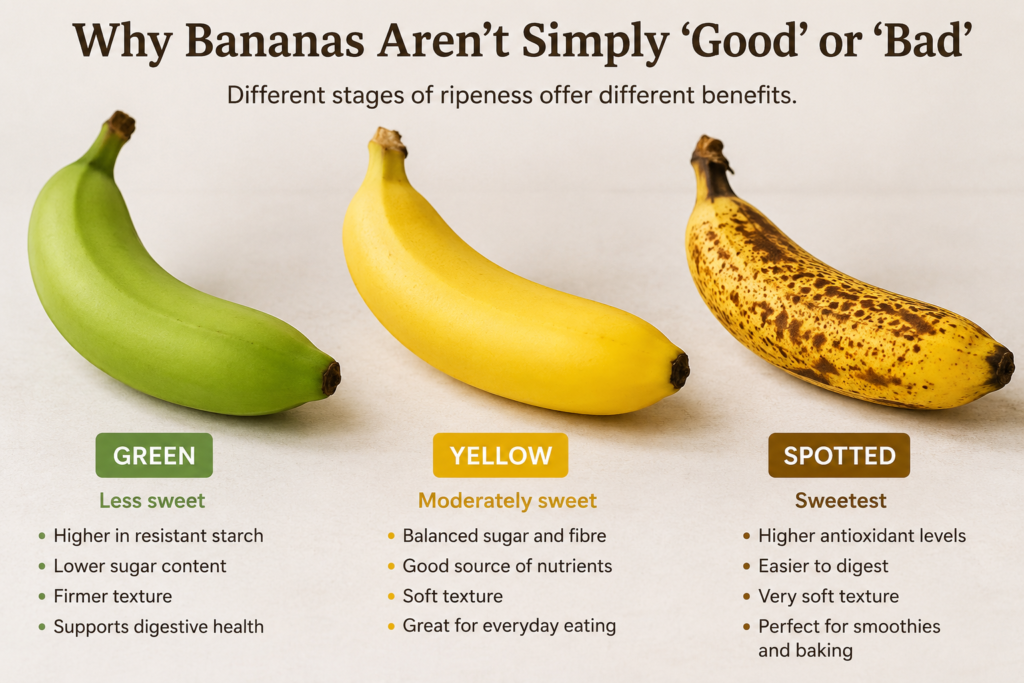
Nutrition is rarely black and white. Foods are often labelled as either “healthy” or “unhealthy”, but the reality is usually more nuanced.
For example, ripe bananas contain more sugar than unripe bananas, which some people may view as less favourable. However, ripening also increases their antioxidant content and soluble fibre, both of which offer important health benefits. Unripe bananas contain less sugar and more gut-friendly fibre, which can support digestion and help slow the release of energy from food. (Afzal et al. 2022: Kumari et al. 2023).
Rather than asking whether bananas are “good” or “bad”, a better question is: Which type of banana is most suitable for my needs?
A ripe banana may be a great choice when you’re looking for a naturally sweet dessert or a quick source of energy. A less ripe banana may be a good choice if you’re focusing on fullness, digestive health, or blood sugar balance.
One thing is clear: bananas are a far more nutritious option than most ultra-processed sweets. Their natural sweetness can help satisfy cravings while providing vitamins, minerals, antioxidants, and fibre.
Want to understand how carbohydrates and fibre affect blood sugar, cravings, and weight management? Click here to read my blog.
Small Changes Add Up
Choosing healthier alternatives is often an excellent first step towards improving your health. However, lasting results rarely come from a single food or a single habit. Sustainable weight loss, hormonal health, and better menstrual health are usually the result of many small changes that work together over time.
If you’re ready to take those next steps and would like personalised support, I’d love to help. Visit my website to learn more or book an appointment.
How Bananas Can Support Hormonal Health and Help Manage Cravings
Bananas are often unfairly labelled as “too sugary,” yet they are packed with nutrients that can support overall health, hormone function, and appetite regulation when enjoyed as part of a balanced diet.
They provide a wide range of minerals, including potassium, magnesium, calcium, zinc, phosphorus, iron, manganese, boron, and copper, as well as vitamin C, B vitamins, carotenoids, and beneficial plant compounds (Kumari et al. 2023).
How are these nutrients relevant for women’s health?

A systematic review found that nutrients such as calcium, magnesium, boron, and zinc may play a role in reducing the severity of menstrual pain and supporting normal muscle and nervous system function (Naz et al. 2020).
While bananas are not a treatment for period pain, they can contribute to your overall intake of these important nutrients.
The Hidden Benefits of Bananas for Energy and Health
Bananas are also a source of carotenoids, plant pigments with antioxidant properties. Research suggests that carotenoids may support immune health and help protect against metabolic conditions such as type 2 diabetes and cardiovascular disease (Kumari et al. 2023).
Metabolic health refers to how well the body regulates blood sugar, energy, and fat storage. Because these processes are closely linked to hormones, supporting metabolic health can have benefits beyond weight management.
Antioxidants and Period Pain: What’s the Connection?
Bananas are rich in antioxidants, and interestingly, ripe bananas contain higher levels than unripe bananas (Kumari et al., 2023). Antioxidants help protect the body against oxidative stress and can help reduce inflammation.
This is particularly relevant for period pain, as research suggests that women with dysmenorrhoea (period pain) often experience higher levels of oxidative stress and inflammation (Chiang et al. 2020; Cressey et al. 2013; Rowe et al. 2020). While bananas are not a cure for menstrual cramps, including antioxidant-rich foods in your diet may help support the body’s natural defences against these processes.
How Do Bananas Affect Blood Sugar?
Many people avoid bananas because they are concerned about their sugar content. However, research suggests that bananas may not be as problematic for blood sugar control as they are often made out to be.
In a study published in the Indian Journal of Experimental Biology, people with high cholesterol who consumed one to two bananas daily for 12 weeks experienced modest improvements in fasting blood glucose levels and lipid profile. In participants with type 2 diabetes, fasting blood glucose levels remained stable, while blood levels of adiponectin increased (Cressey et al. 2013).
Researchers suggested that these effects may be linked to the fibre, magnesium, and antioxidant compounds naturally present in bananas (Cressey et al. 2013).
Why Is This Important?
Healthy blood sugar regulation is important for much more than diabetes prevention. It plays a key role in energy levels, appetite control, weight management, and hormonal health.
When cells are sensitive to insulin, they can take up glucose from the bloodstream more efficiently and use it for energy. This helps the body maintain healthy blood sugar levels and supports normal metabolic function.
Stable blood sugar levels may also help reduce energy crashes and cravings, making it easier to maintain healthy eating habits over time.
The increase in adiponectin observed in the study is also interesting. Adiponectin is a hormone produced by fat tissue that is associated with improved insulin sensitivity and a healthier lipid profile. Higher adiponectin levels are generally considered a positive marker of metabolic health (Cressey et al. 2013).
Because blood sugar regulation, metabolism, and hormones are closely connected, supporting metabolic health may also have positive effects on hormonal health.
What Is the Take-Home Message?
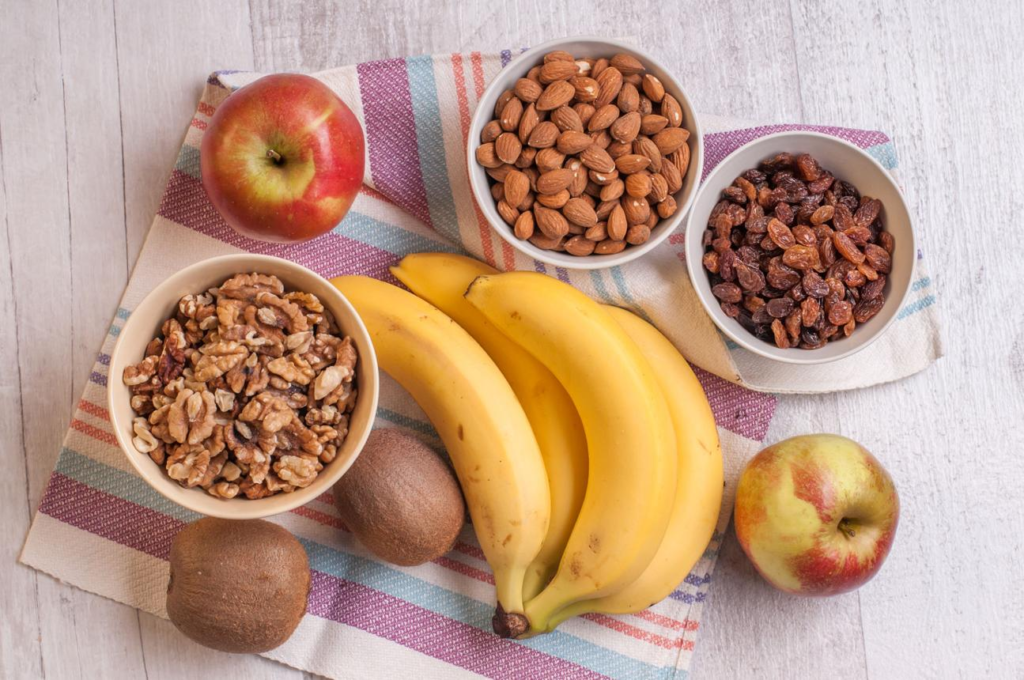
Current evidence suggests that eating one to two bananas per day is unlikely to have a negative effect on blood glucose control, even in people with type 2 diabetes. Some studies have also reported modest benefits for blood sugar regulation, insulin sensitivity, and metabolic health (Cressey et al. 2013).
However, the available research is based on relatively small studies, so more evidence is needed before firm conclusions can be drawn.
For most people, bananas can be enjoyed as part of a balanced diet and are likely to be a more nutritious choice than many highly processed sweet snacks.
References:
Afzal, M.F. et al. (2022). ‘Bioactive profile and functional food applications of banana in food sectors and health: a review’, International Journal of Food Properties, (25)1, pp. 2286-2300
Chiang, Y.F. et al. (2020). ‘The Inhibitory Effect of Extra Virgin Olive Oil and Its Active Compound Oleocanthal on Prostaglandin Induced Uterine Hypercontraction and Pain—Ex Vivo and In Vivo Study’, Nutrients 12(10). P.3012
Cressey, R. et al. (2013). ‘Daily consumption of banana marginally improves blood glucose and lipid profile in hypercholesterolemic subjects and increases serum adiponectin in type 2 diabetic patients’, Indian Journal of Experimental Biology, (52), pp. 1173-1181
Kumari, P. et al. (2023). ‘Banana and its by-products: A comprehensive review on its nutritional composition and pharmacological benefits’, eFood, (4)5,
Naz, M.S.G. (2020). ‘The Effect of Micronutrients on Pain Management of Primary Dysmenorrhea: a Systematic Review and Meta‐Analysis’, Journal of Caring Sciences, 9(1), pp.47–56.
Rowe, E.F. et al. (2020). ‘Primary Dysmenorrhea Diagnosis and Therapy’, Obstetrics and Gynaecology, 136(5), pp1047–1058