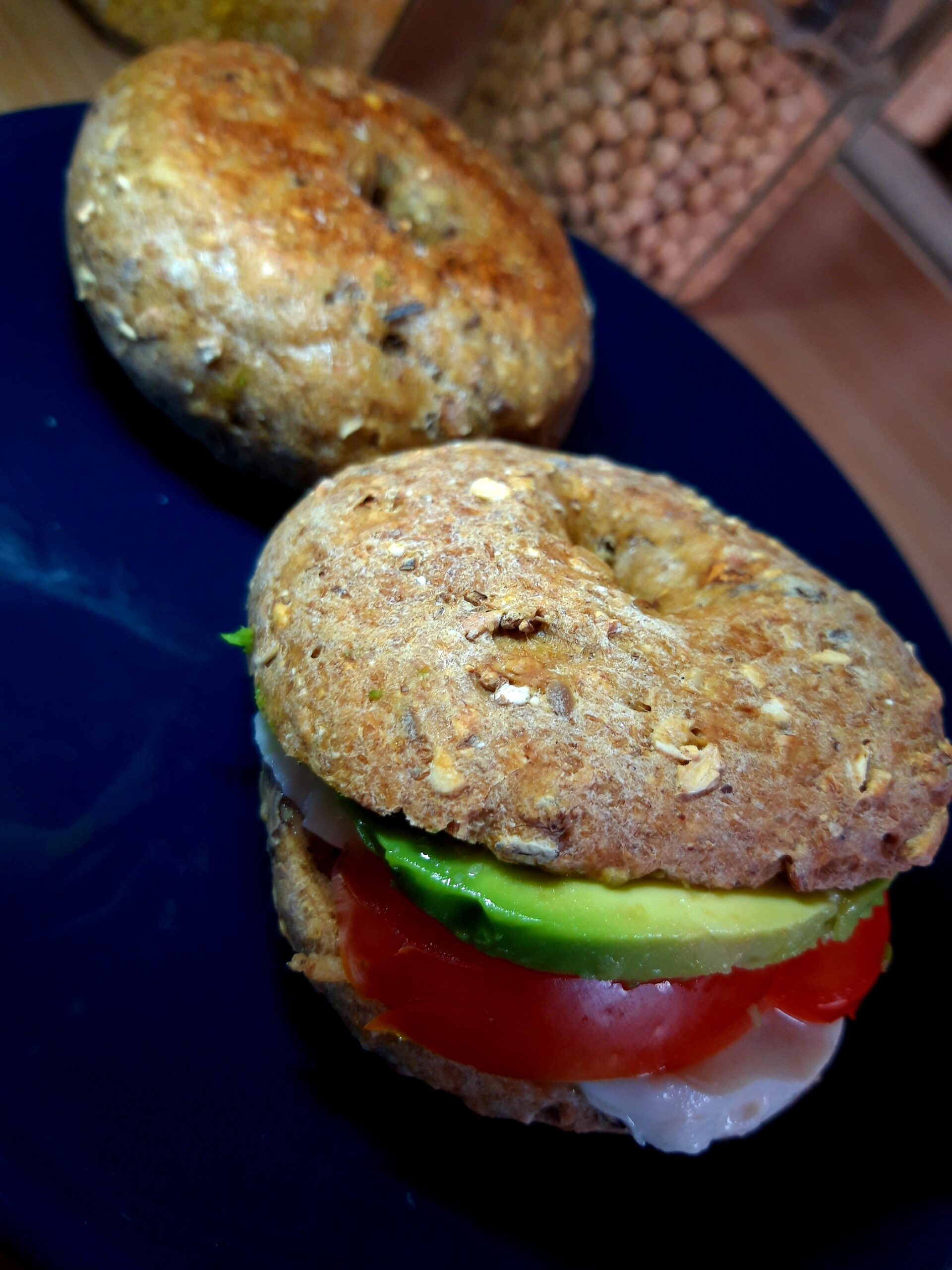
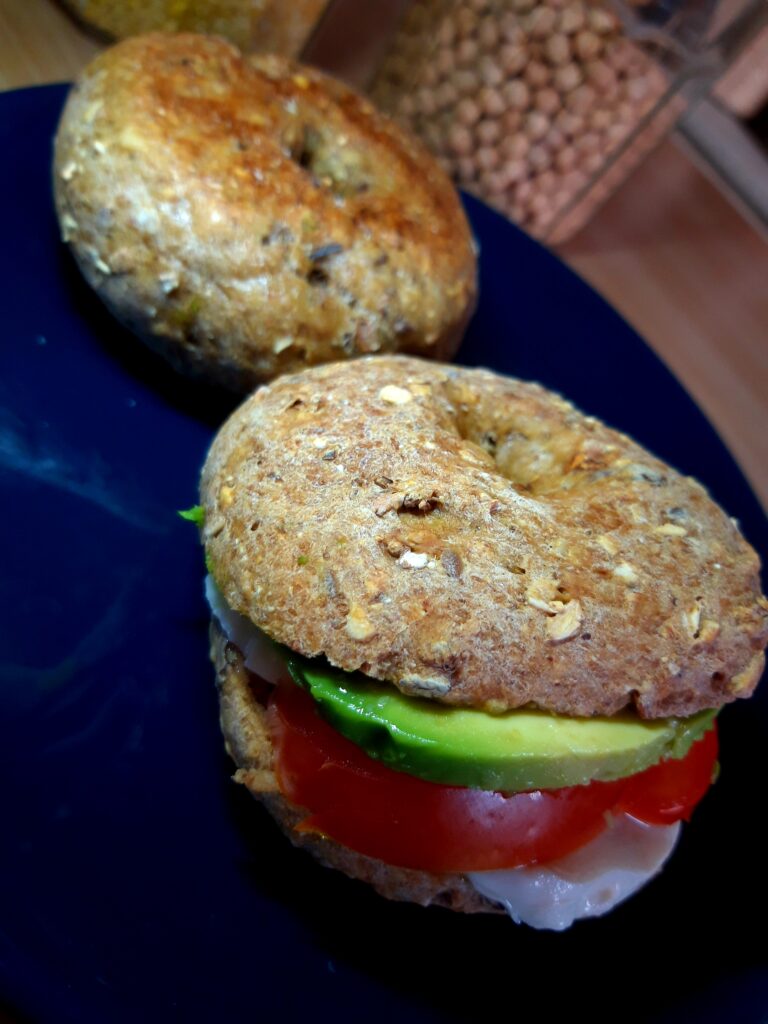
A wholesome, nourishing twist on a classic favourite.
These bagels are soft, satisfying, and gut-friendly — the perfect choice for those who want real nourishment without the fuss.
No Additives – just simple, natural ingredients.
High in Fibre – supports healthy digestion and a happy gut.
Protein-Rich – helps keep you fuller for longer and fuels your day.
No Added Sugar – naturally satisfying without the hidden sweeteners.
No Yeast, No Rise Needed – no waiting required.
Contains Psyllium Husk – gentle on the gut, promotes regularity, and balances digestion.
Click here for a gluten-free version!
Ingredients
- ½ cup water
- 1 cup wholemeal seeded bread flour
- ½ tsp salt
- 1 tbsp psyllium husk
How to make it
- Preheat the oven to 180 °C (350 °F).
- In a bowl, pour in the water. Add the salt and psyllium husk, then whisk until combined.
- Gradually add the flour, stirring with a spatula.
- Once the dough starts forming, use your hands to knead it until smooth.
- Divide the dough into two equal pieces. With wet hands, shape each portion into a ball, flatten slightly, and poke a hole in the middle to form a bagel shape.
- Place the bagels on a baking tray lined with parchment paper.
Bake for about 35 minutes, or until firm and lightly golden.
Nutrition Facts
| Serving Size: 1 bagel — 123g | ||
| Calories | 220.3 kcal | 11 % |
| Total Fat | 2.8 g | 4 % |
| Saturated Fat | 0.4 g | 2 % |
| Trans Fat | 0 g | |
| Cholesterol | 0 mg | 0 % |
| Sodium | 599.3 mg | 25 % |
| Total Carbohydrate | 42.2 g | 14 % |
| Dietary Fibre | 8.9 g | 36 % |
| Sugars | 1.7 g | |
| Protein | 9.8 g | 20 % |
* Percent Daily Values are based on a 2,000 calorie diet. Your daily values may be higher or lower depending on your calorie needs
The Health Benefits of Wholemeal Flour: More Than Just Fibre
When we think of “healthy grains,” oats or quinoa often come to mind, while humble wheat sometimes gets overlooked. Yet, research shows that wholemeal wheat flour (made from the entire grain) has powerful benefits for our gut, heart, and overall health. Unlike refined white flour, which loses much of its nutritional value during processing, wholemeal flour retains the bran, germ, and endosperm, delivering a full package of fibre, vitamins, minerals, and plant compounds (Dalton et al. 2012; Seal et al. 2021)
Rich in Dietary Fibre for Gut Health
Wholemeal flour is an excellent source of dietary fibre. This fibre helps to:
- Improve digestion by increasing stool bulk and promoting regularity.
- Speed up gut transit time, reducing the risk of constipation. In addition, indigestible carbohydrates in whole grains act as fuel for our gut microbiota (the “trillions of bacteria” in our intestines). As these fibres ferment, they produce short-chain fatty acids like butyrate, which support gut lining health, reduce inflammation, and may even play a role in lowering disease risk (Dalton et al. 2012; Seal et al. 2021).
A Protective Food Against Chronic Disease
Wholemeal wheat contains polyphenols, carotenoids, vitamin E, and phytosterols — bioactive compounds that work together to reduce oxidative stress and inflammation, both of which are linked to chronic disease (Dalton et al. 2012; Seal et al. 2021).
Complex Carbohydrates for Steady Energy
Unlike refined flour, which is quickly broken down into sugars, wholemeal flour provides a slower, more stable release of energy. This helps balance blood sugar levels and reduces energy crashes — making wholemeal-based foods better for long-term energy and metabolic health (Dalton et al. 2012; Seal et al. 2021).
The Bottom Line
Switching to wholemeal flour is a simple but meaningful step toward better health. Whether in bread, bagels, or baked goods, choosing wholemeal means you’re not just eating for taste — you’re nourishing your gut, supporting your heart, and lowering your risk of diet-related diseases (Dalton et al. 2012; Seal et al. 2021).
What is Psyllium Husk?
Psyllium husk comes from the seeds of the Plantago ovata plant. It’s a form of soluble fibre that swells when mixed with water, turning into a gel-like substance in your digestive system. This makes it incredibly helpful for digestion, weight management, and even blood sugar balance (Roger et al. 2023).
The Benefits of Psyllium Husk
Supports Healthy Weight Loss
Research shows that taking psyllium before meals may help with weight management. It works by helping you feel full for longer, reducing overeating, and lowering waist circumference in people who are overweight (Jalanka, 2019).
Improves Gut Health & Relieves Constipation
Because psyllium holds on to water, it softens stools and makes them easier to pass—relieving constipation in a gentle way. It also helps create a healthier gut environment by supporting “good bacteria” like Faecalobacterium, while reducing bacteria linked to harder stools (Garg et al. 2024)..
Balances Blood Sugar
For people managing blood sugar, psyllium has shown real promise. In one study, people who added psyllium to their routine (while on diabetes medication) saw improvements in blood sugar levels, HbA1C (a marker of long-term glucose control), and even weight (Abutair et al. 2026).
Gentle on Digestion
Unlike some other fibres, psyllium is less likely to cause bloating or gas. That makes it a great option if you want to add more fibre without the discomfort (Pal et al. 2020).
Takeaway: Psyllium husk is a simple, natural way to support digestion, weight management, and blood sugar control. Just remember to pair it with a balanced diet and plenty of water.
Take the Next Step Toward Better Health
As a qualified Nutritional Therapist, I work with both men and women who want to improve their health, manage their weight, and feel more energised. For women, I also offer support with balancing hormones and creating healthier, more regular cycles.
If you’re ready to feel your best and take control of your wellbeing, I’d love to guide you on that journey. Visit my Website https://vikihealthyliving.com/ to learn more and start your path to better health today.
References:
Abutair, A. et al. (2016). ‘Soluble fibers from psyllium improve glycemic response and body weight among diabetes type 2 patients (randomized control trial)’ Nutrition Journal, pp.1-7
Dalton, S.M.C. et al. (2012). ‘Potential Health Benefits of Whole Grain Wheat Components‘ Feature Article, 47(4), pp.163-174
Garg, M. et al. (2024). ‘Psyllium Husk Positively Alters Gut Microbiota, Decreases Inflammation, and Has Bowel-Regulatory Action, Paving the Way for Physiologic Management of Irritable Bowel Syndrome’ Gastroenterology, (166)3, pp. 545-546
Jalanka, R. et al. (2019). ‘The Effect of Psyllium Husk on Intestinal Microbiota in Constipated Patients and Healthy Controls’ Molecular Sciences, (20)2, p. 433
Pal, S. et al. (2020). ‘The effect of a fibre supplement compared to a healthy diet on body composition, lipids, glucose, insulin and other metabolic syndrome risk factors in overweight and obese individuals’ British Journal of Nutrition, (105), pp. 90–100
Roger, D. et al. (2023). ‘Psyllium is a natural nonfermented gel-forming fiber that is effective for weight loss: A comprehensive review and meta-analysis’ Journal of the American Association of Nurse Practitioners, (35), pp. 468–476
Seal, J.S et al. (2021). ‘Health benefits of whole grain: effects on dietary carbohydrate quality, the gut microbiome, and consequences of processing‘, ComprRevFoodSci Food Saf., (20), pp.2742–2768.