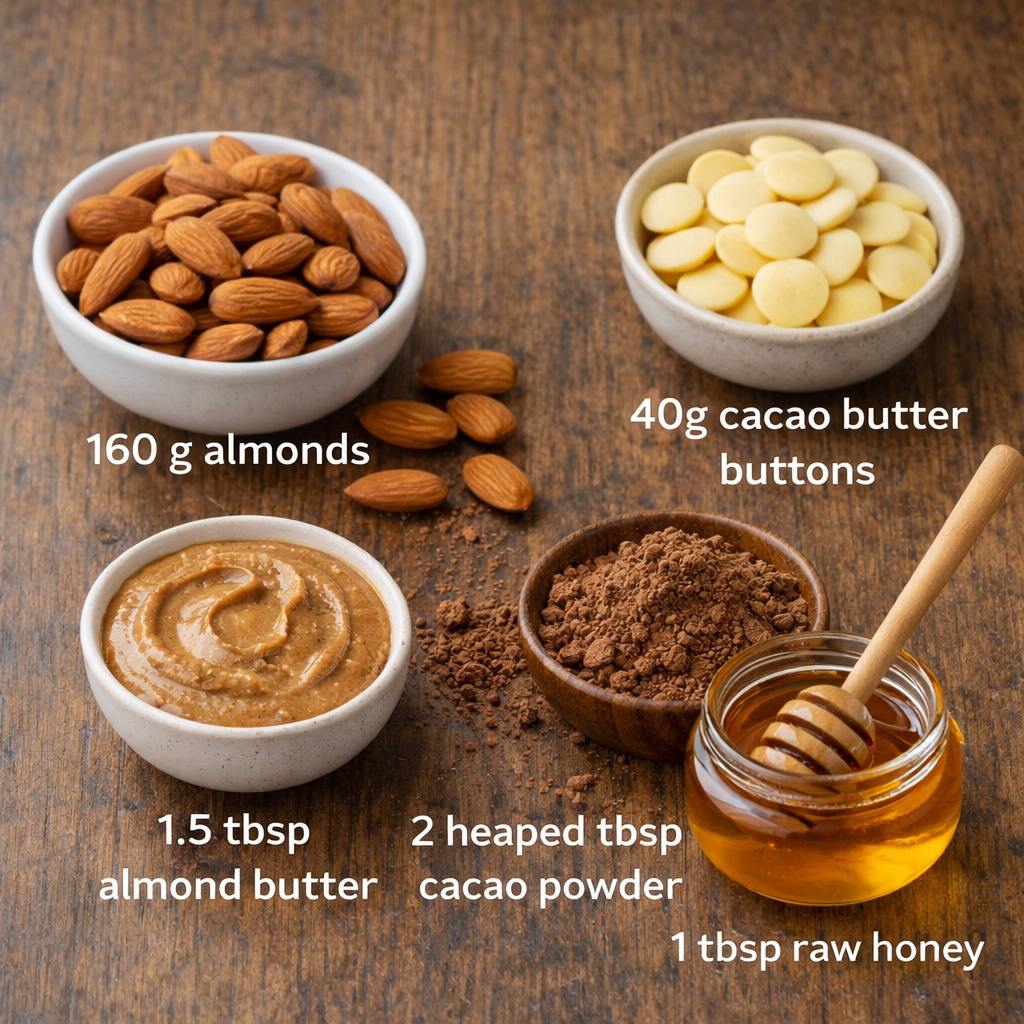
These Easter Almond Chocolate Eggs are a simple, nourishing twist on a classic seasonal treat. Made with wholesome ingredients like almonds, cacao, and raw honey, they offer a rich, chocolatey flavour without any refined sugar. Perfect for sharing with family or gifting, they’re both indulgent and feel-good at the same time. This easy recipe requires minimal ingredients and comes together beautifully with just a little preparation.
Ingredients
Method
Add the almonds to a blender and blend until they reach a fine, smooth consistency.
In a saucepan over low heat, gently melt the almond butter, cacao butter buttons, and raw honey until fully combined.
Stir in the cacao powder and mix until smooth and glossy.
Add the ground almonds to the mixture and stir thoroughly until everything is well incorporated.
Pour the mixture into a silicone Easter egg mould (6 eggs, approx. 9 cm x 6.5 cm each), gently smoothing the tops for an even finish.
Place in the fridge and allow to set overnight.
Once fully set, carefully remove the eggs from the mould—they should pop out easily
Nutrition Facts
Serving Size: 1 × 1 egg — 41g
Amount Per Serving
% Daily Value*
Calories
250.2 kcal
13 %
Total Fat
22.2 g
34 %
Saturated Fat
5.4 g
27 %
Trans Fat
0 g
Cholesterol
0 mg
0 %
Sodium
0.4 mg
0 %
Total Carbohydrate
9.1 g
3 %
Dietary Fiber
3.4 g
14 %
Sugars
4 g
Protein
6.6 g
13 %
Vitamin A
0 %
•
Vitamin C
0 %
Calcium
8 %
•
Iron
7 %
* Percent Daily Values are based on a 2,000 calorie diet. Your daily values may be higher or lower depending on your calorie needs.
Almonds: The Science-Backed Superfood for Weight Loss & Women’s Health
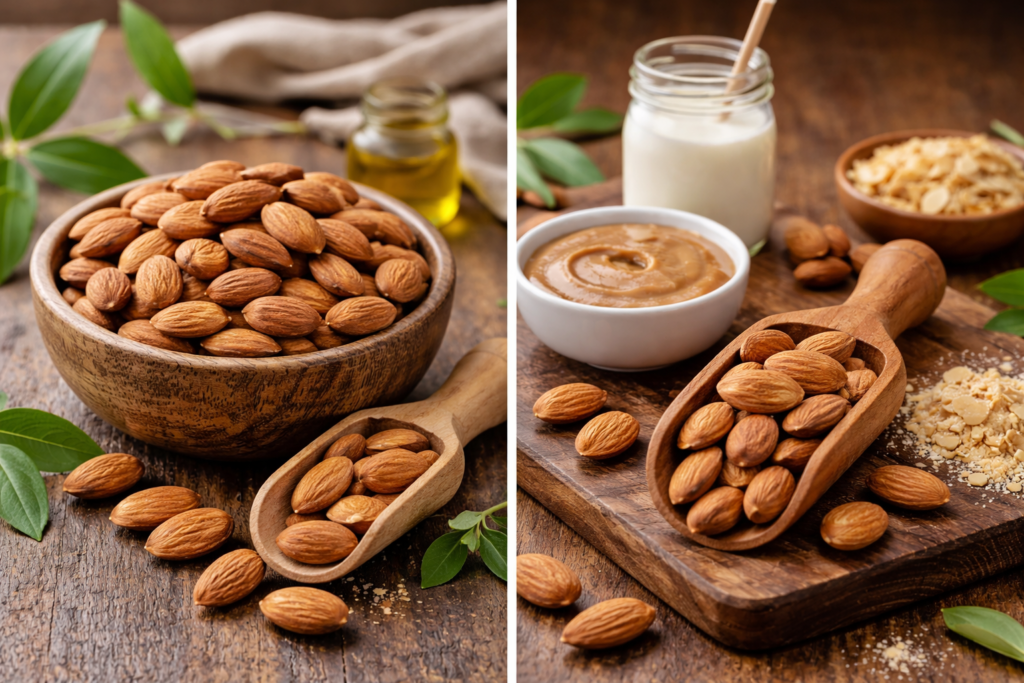
Almonds are often seen as a high-calorie snack—but research tells a very different story. Despite being energy-dense, almonds have consistently been shown to support healthy weight management, body composition, and metabolic health. Packed with nutrients and backed by clinical studies, they are one of the most effective and practical additions to a balanced diet (Dreher, 2021)
If you’re looking to improve your health—especially for weight loss or hormonal balance—almonds may be one of the simplest tools you can use.
Ready to Take Control of Your Health?
If you’re struggling with weight loss, hormonal balance, or women’s health concerns, you don’t have to figure it out alone.
I offer personalised nutritional therapy tailored specifically to your body, lifestyle, and goals.
Visit my website to learn more and book your consultation:https://vikihealthyliving.com/ Start your journey towards sustainable weight loss and better health today
Do Almonds Cause Weight Gain?
It’s a common concern: almonds are high in fat and calories, so shouldn’t they lead to weight gain?
Surprisingly, research consistently shows the opposite.
Randomised controlled trials (RCTs) and meta-analyses have found that:
Almonds do not increase body fat or weight gain
They can actually slightly reduce body weight and fat mass
They outperform many other nuts in improving body composition (Dreher, 2021)
In fact, almonds are one of the only nuts shown to significantly support reductions in:
Body weight
Body fat
BMI (Body Mass Index)
Waist circumference
Visceral (deep abdominal) fat (Dreher, 2021)
How Almonds Support Weight Loss
Almonds work in several powerful ways to support fat loss and appetite control:
1. They Help Control Hunger
Almonds increase feelings of fullness and reduce the desire to eat, helping naturally lower calorie intake (Dreher, 2021).
2. You Eat Less Without Realising
When almonds are added to the diet, people tend to compensate by eating less of other foods—without consciously trying (Dreher, 2021).
They Support Metabolism
Almonds may:
Increase resting energy expenditure (the number of calories your body burns at rest—even when you’re doing nothing).
Reduce fat storage
Improve blood sugar control, which is key for fat loss (Dreher, 2021)
Almonds & Heart Health
Almonds are rich in:
Unsaturated fats
Fibre
Vitamin E
Magnesium
Polyphenols
These nutrients work together to support cardiovascular health (Dreher, 2021).
Proven Benefits:
Regular almond intake has been shown to:
Lower total cholesterol (TC)
Reduce LDL (“bad”) cholesterol
Improve blood lipid profiles
Reduce atherogenic risk (linked to heart disease) (Dreher, 2021)
In fact, health authorities recommend:
Eating around 42.5 g (1.5 oz) of nuts daily may reduce the risk of heart disease when part of a healthy diet.
Almonds & Blood Sugar Balance
Almonds are naturally:
Low in carbohydrates
Low glycaemic index (GI)
High in healthy fats and fibre (Dreher, 2021)
This means they can:
Help stabilise blood sugar levels
Improve glycaemic control
Support people with or at risk of Type 2 diabetes (Dreher, 2021)
Replacing refined carbohydrates with nuts like almonds has been shown to:
Lower HbA1c
Improve cholesterol markers
Reduce cardiovascular risk (Dreher, 2021)
Why Almonds Are Especially Great for Women’s Health
Almonds can be particularly beneficial for women due to their impact on:
Hormonal balance (via stable blood sugar and healthy fats)
Weight management (especially abdominal fat)
Energy levels (thanks to magnesium and B vitamins)
Skin health (rich in vitamin E and antioxidants)
They’re a simple, effective addition for women looking to feel more balanced, energised, and in control of their health (Dreher, 2021).
Ready to Take Control of Your Health?
If you’re struggling with weight loss, hormonal balance, or women’s health concerns, you don’t have to figure it out alone.
I offer personalised nutritional therapy tailored specifically to your body, lifestyle, and goals.
Visit my website to learn more and book your consultation: https://vikihealthyliving.com/ Start your journey towards sustainable weight loss and better health today.
Reference
Dreher, M.L. (2021). ‘A Comprehensive Review of Almond Clinical Trials on Weight Measures, Metabolic Health Biomarkers and Outcomes, and the Gut Microbiota’, Nutrition Science Solutions, (13)6