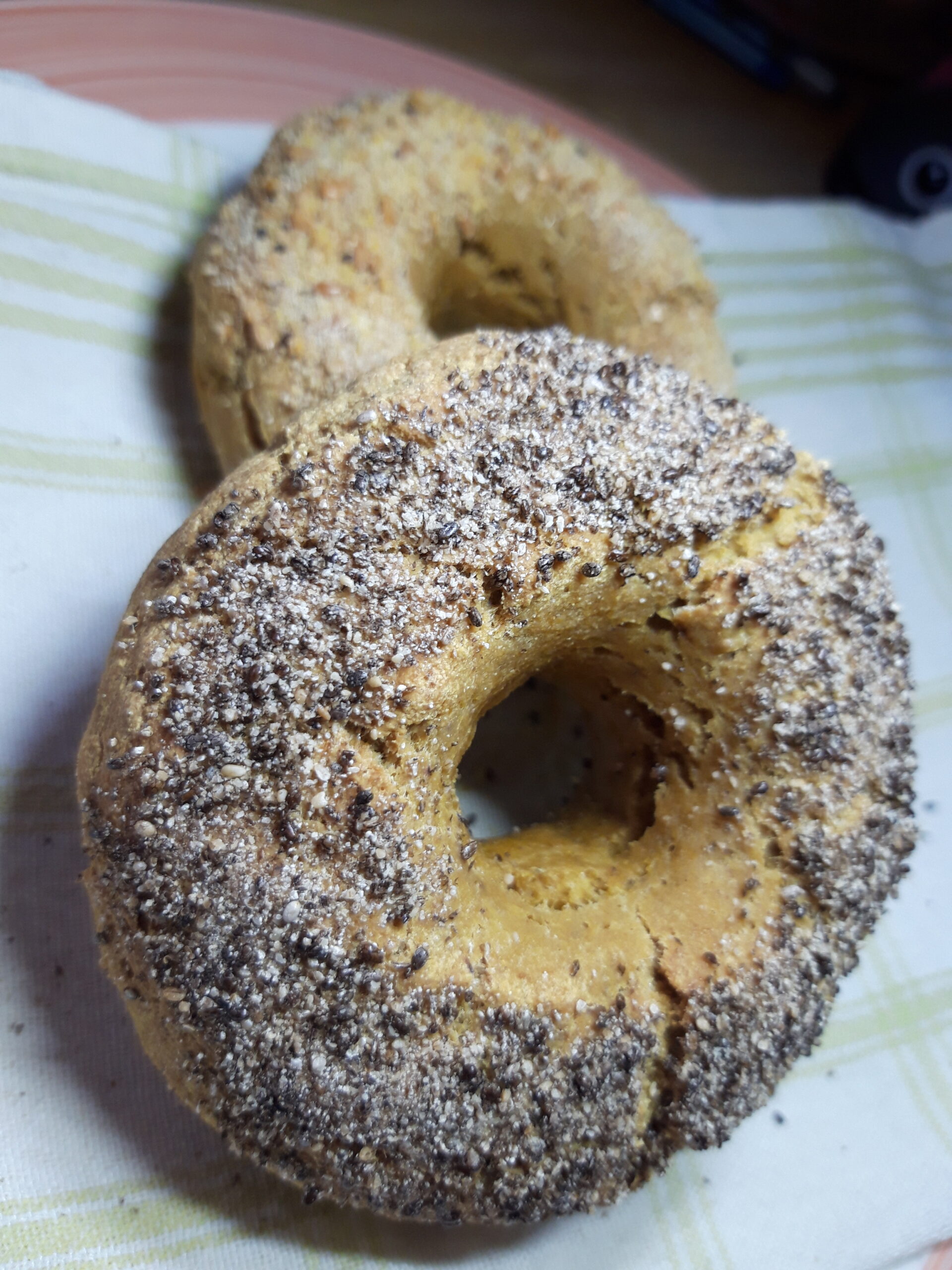
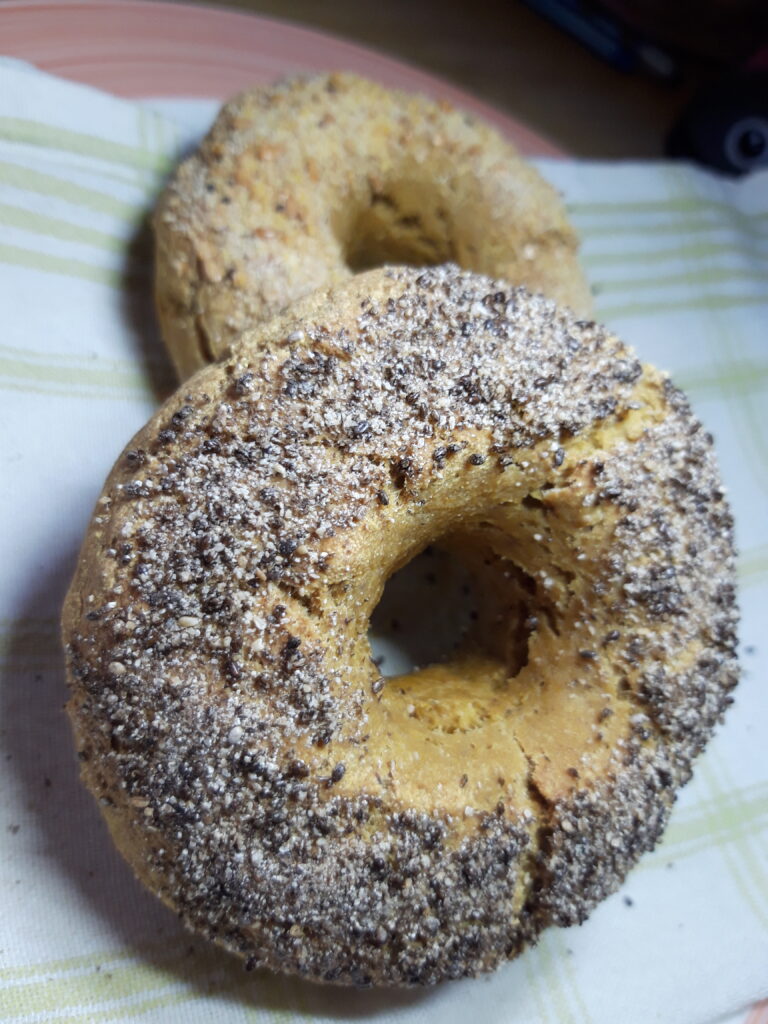
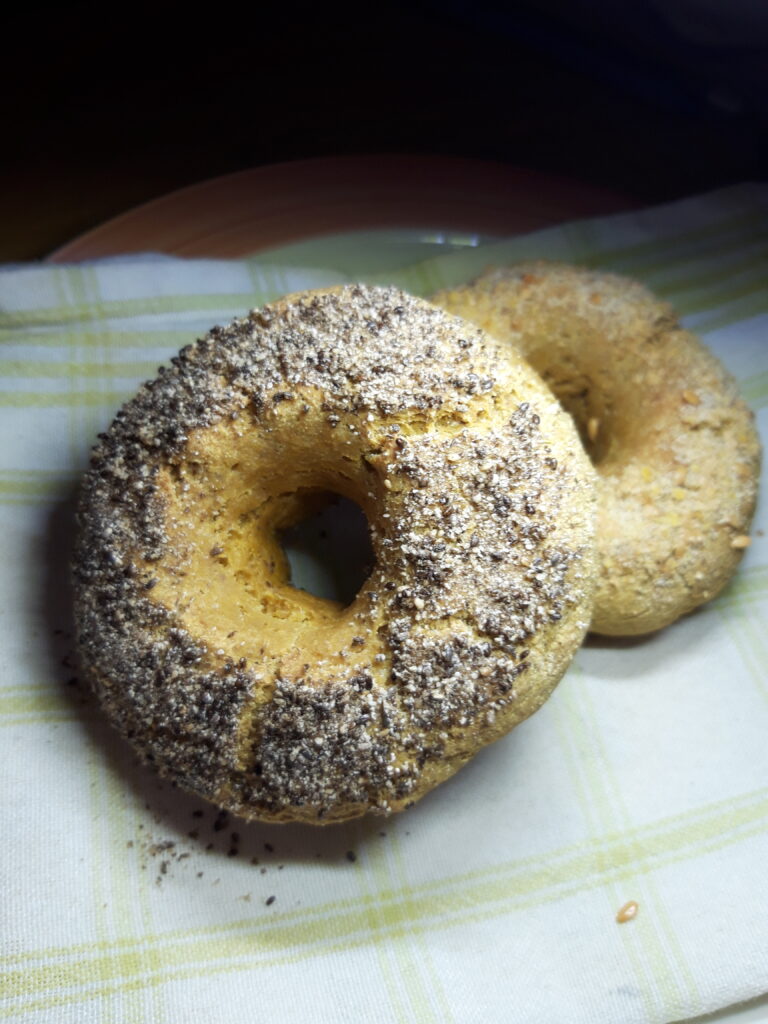
These homemade bagels are a nutritious twist on the classic. Made with protein-rich quinoa and fibre-packed psyllium husk, they’re soft, satisfying, and far healthier than store-bought versions. Quick to prepare and wonderfully filling, they make the perfect base for both sweet and savoury toppings.
“Quinoa is a powerhouse food, but it works best as part of a healthy diet and active lifestyle. It’s one step toward your bigger goals — and I’m here to help you take the rest.”
Visit my Website https://vikihealthyliving.com/ to learn more and start your path to better health today.
Ingredients
- ½ cup water
- 2 tbsp psyllium husk
- half teaspoon salt
- 1 cup quinoa flour
- half teaspoon bicarbonate of soda
- half teaspoon flaxseed
- half teaspoon chia seed
Method
Preheat the oven to 180°C (350°F) and line a baking tray with baking paper.
In a bowl, mix together the water, psyllium husk, bicarbonate of soda, and salt.
Gradually add the flour, mixing until a dough forms.
Divide the dough into two equal portions.
With wet hands, shape each portion into a ball, flatten slightly, and poke a hole in the middle to form a bagel shape.
Sprinkle the top with flax and chia seeds and place on the prepared tray.
Bake for about 35 minutes, until firm and golden.
Let cool slightly before slicing and serving.
Nutrition Information
| Per × 1 bagel — 125g %Reference Intake RI |
| Energy 1008.8 kJ / 241 kcal | 12 % |
| Fat 4.3 g | 6 % |
| Of which Saturates 0.5 g | 2 % |
| Of which Mono-unsaturates 1.1 g | |
| Of which Poly-unsaturates 2.4 g | |
| Carbohydrate 36 g | |
| Of which Sugars 2.9g | |
| Of which Starches 33g | |
| Fibre 8. g | |
| Protein 7.1 g | 14 % |
| Salt 0.9 g | 15 % |
| Vitamin C 42.3 mg | 53 % |
| Vitamin A 0.4 µg | 0 % |
| Calcium 101.9 mg | 13 % |
| Iron 3.7mg | 26 % |
* Reference Intake Values are based on a 2,000 calorie diet. Your daily values may be higher or lower depending on your calorie needs.
Quinoa: The Ancient Grain with Modern Health Benefits
Quinoa may feel like a recent health trend, but this pseudo-cereal has deep roots. Originating from the Andean region between Bolivia and Peru, quinoa has been cultivated for thousands of years as a staple food. Today, it’s celebrated worldwide for its unique nutritional profile and potential health benefits.
A Nutritional Powerhouse
Quinoa seeds pack an impressive nutrient density. They’re naturally gluten-free, making them suitable for people with coeliac disease, and they offer a rare plant-based source of high-quality protein. Protein levels range from 16–20 g per 100 g, which is comparable to casein, the protein found in milk (Srujana et al. 2019).
Unlike most plant foods, quinoa provides seven essential amino acids — lysine, isoleucine, methionine, phenylalanine, threonine, valine, and leucine — making it one of the best plant sources of protein available (Carvalho et al. 2013).
Quinoa also contains a balanced fat profile, with omega-3 (linolenic acid) making up 52% and omega-6 (linoleic acid) about 40% of its fat content. Though total fat is modest at 4.4–7.5 g per 100 g, these healthy fats support cardiovascular health (Srujana et al. 2019).
In addition, quinoa is rich in minerals such as calcium (up to 1164 mg/kg), iron (up to 948 mg/kg), and phosphorus (up to 4543 mg/kg) (Srujana et al. 2019). Its fibre content (7 g per 100 g) includes both soluble and insoluble fibre, which help regulate fat metabolism, stabilize post-meal blood glucose, and promote satiety (Carvalho et al. 2013).
Antioxidant Protection
Quinoa isn’t just about protein and fibre — it’s also a source of powerful antioxidants. Flavanols like kaempferol and quercetin, along with phenolic acids such as protocatechuic and vanillic acid, contribute to its antioxidant activity (Alvarez et al. 2010). These compounds help combat oxidative stress, supporting long-term health.
What the Science Says
Several human studies have explored quinoa’s impact on health:
- Triglycerides & Cholesterol
A randomized, controlled trial found that eating 50 g of quinoa daily for 12 weeks lowered triglyceride levels in overweight and obese participants. However, no weight loss was observed since diets were otherwise unrestricted (Perez et al. 2017). - Metabolic Benefits in Post-Menopausal Women
In a four-week double-blind study, 35 women consumed either quinoa flakes or corn flakes. The quinoa group saw improvements in protein and fibre intake, lower triglycerides, higher glutathione (GSH), and reduced total cholesterol and LDL cholesterol (Carvalho et al. 2013). - Tolerability in Coeliac Patients
A six-week trial with 19 coeliac patients consuming 50 g of quinoa daily found it was generally well tolerated. Some mild digestive symptoms were reported, but overall quinoa did not worsen the condition and may even offer benefits despite its prolamin content (Zevallos et al. 2013). - Blood Sugar Regulation
An abstract from a randomized trial reported that quinoa lowered post-meal and fasting blood glucose, while also improving HbA1c and insulin levels (Huang et al. 2018). Another crossover study testing bread rolls with 20% quinoa flour showed a modest improvement in glucose response compared to wheat rolls, though the relatively small quinoa content (about 20 g) may have limited the effect (Li et al. 2018).
Bottom line: Quinoa is more than just a trendy “superfood.” Backed by scientific studies, it’s a nutrient-dense, gluten-free grain alternative that supports metabolic health, cholesterol management, and satiety — all while being delicious and versatile in the kitchen.
Quinoa isn’t just food — it’s fuel for your body and your goals. Packed with protein, fibre, and essential nutrients, it can support weight loss, restore hormonal balance, and nurture healthy periods. But real, lasting change comes when we pair it with nourishing meals, movement you enjoy, and habits that honour your body. You deserve to feel strong, balanced, and full of energy — and I’m here to guide you every step of the way, turning small daily choices into powerful, lifelong results.
Visit my Website https://vikihealthyliving.com/ to learn more and start your path to better health today.
References
References:
Alvarez, L. et al. (2010). ‘Polyphenol composition and in vitro antioxidant activity of amaranth, quinoa, buckwheat and wheat as affected by sprouting and baking’, Food Chem 119. pp.770-778
Carvalho, F.G. et al. (2013). ‘Metabolic parameters of postmenopausal women after quinoa or corn flakes intake – a prospective and double-blind study’, International Journal of Food Sciences and Nutrition, ; 65(3), pp. 380–385
Huan, L. et al. (2025). ’ Quinoa is more effective than other whole grains in the management of impaired glucose tolerance: a randomized controlled trial’, Food &Function (2).
Li, L. et al. (2018). ‘Effects of Quinoa (Chenopodium quinoa Willd.) Consumption on Markers of CVD Risk’, Nutrients (10) 777
Perez, D. et al. (2017). ‘Quinoa Seed Lowers Serum Triglycerides in Overweight and Obese Subjects: A Dose-Response Randomized Controlled Clinical Trial’ Current Developments in Nutrition 1(9)
Srujana, M. et al. (2019). ‘Processing technologies and health benefits of quinoa’, The Pharma Innovation 8(5), pp. 155-160
Zevallos, V. et al. (2013). ‘Gastrointestinal Effects of Eating Quinoa ( Chenopodium quinoa Willd.) in Celiac Patients’, Am J Gastroenterol, (109), pp.270–278